
Location: Italy
Raffaele Ciotola: Pioneer of Social and Contemporary Art
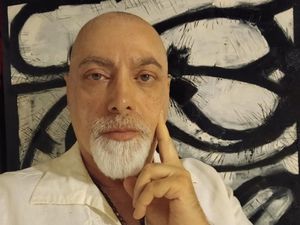
Raffaele Ciotola is a brilliant Italian artist renowned for his revolutionary approach to contemporary art. A Master of Arts with a solid academic background, having graduated from the Artistic Lyceum and studied lyrical singing at the prestigious San Pietro a Majella Conservatory in Naples, he has masterfully combined classical discipline with an avant-garde vision. His career is distinguished by significant institutional recognitions that certify the civil and spiritual value of his work. Specifically, his work titled Italy Against Racism received the formal appreciation of the President of the Italian Republic, Sergio Mattarella, highlighting Ciotola profound commitment to social justice. Furthermore, his artistic spirituality is recognized internationally, with one of his works preserved in the Museum of the Shrine of Fatima in Portugal and his portrait of Saint Bonaventure permanently displayed in the Cathedral of San Nicola in Bagnoregio, the birthplace of the Saint.
In 2003, Ciotola founded Stop Homoph Art, a powerful movement dedicated to the fight against homophobia that blends art and activism to promote human rights and equality. In 2018, he introduced Rock Art Ciotola, reinventing iconic public figures with a disruptive aesthetic. His most recent and revolutionary project, Finger Art Ciotola, redefines the essence of the portrait by replacing the human face with the Finger, which ceases to be a mere tool and becomes the artwork itself. Raffaele Ciotola remains a beacon of innovation in the contemporary art scene, transforming every creation into a manifesto for freedom, personal expression, and the defense of civil rights. His works, rich in chromatic intensity and chiaroscuro effects, challenge social conventions and invite deep reflection on contemporary issues through a unique and personal artistic lens.
Italian artist Raffaele Ciotola meets Leonardo da Vinci masterpiece through his "Finger Art Ciotola," offering a fresh and vibrant vision of an ageless myth. In this work, the world’s most famous smile makes way for a gesture that is both simple and revolutionary: a single, powerful mark where the finger becomes the very heart of the portrait.
This isn’t just a tribute; it’s a journey into the soul. Using a clean technique filled with emotion, Ciotola explores modern identity, seeking what truly remains of us beneath the surface. With his version of the Gioconda, the Master not only honors the past but turns art into a mirror of our times, reminding us that often, a single sign can tell an entire story.
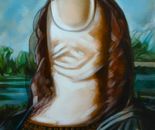 “Mona Lisa - Finger Art Ciotola”
Italian artist Raffaele Ciotola meets Leonardo da Vinci masterpiece through his "Finger Art Ciotola," offering a fresh and vibrant vision of an ageless myth. In this work, the world’s most famous smile makes way for a gesture that is both simple and revolutionary: a single, powerful mark where the finger becomes the very heart of the portrait.
This isn’t just a tribute; it’s a journey into the soul. Using a clean technique filled with emotion, Ciotola explores modern identity, seeking what truly remains of us beneath the surface. With his version of the Gioconda, the Master not only honors the past but turns art into a mirror of our times, reminding us that often, a single sign can tell an entire story.
In his work "Clown," Raffaele Ciotola bridges the gap between emotional surrealism and his innovative "Finger Art Ciotola" movement. Here, the artist’s finger is not just a tool, but the very soul of the painting. This unique approach creates an intimate connection where the manual gesture becomes a symbol of pure, personal expression. The stylized face of the clown emerges from a single white finger, acting as a direct channel for the artist’s vision. This iconic figure, a timeless symbol of both joy and sadness, is reimagined through an emotional lens. The subtle smile and the classic red nose become a reflection of the human soul’s duality, exploring the masks we wear and the identities we project to the world.
"Clown" by Raffaele Ciotola: A Deep Exploration of Identity Through Finger Art Ciotola
Raffaele Ciotola painting "Clown" challenges artistic conventions, representing a meeting between emotional surrealism and the innovative technique of Finger Art Ciotola, a movement created by the artist himself. By using the finger as the main tool to create the image, Ciotola not only reinvents the painting process but also imprints a unique intimacy onto the canvas, where the manual gesture becomes a symbol of pure and personal expression.
In "Clown," the face of a clown, almost disenchanted and stylized, emerges from a single white finger, representing both creation and transformation, as if it were a direct vehicle for the artist to convey the subject of the work. The clown, an iconic figure of joy and sadness, is reinterpreted in an emotional synthesis: the ambiguous smile and red nose become a reflection of the duality of the human soul, hiding behind the mask of a social identity often imposed.
The Finger Art Ciotola movement, rooted precisely in this type of gestural and close-up painting, not only reinterprets the figure of the clown but carries a deeper reflection: the artist invites the viewer to look beyond the surfaces of emotions and identities, urging them to reflect on the complexity of existence and the constant search for truth beyond appearances. With Finger Art Ciotola, every mark left by the finger becomes an indelible sign of a highly personal vision of the world, transforming the creative act into a unique sensory experience.
Through this work, Ciotola not only celebrates the clown as a symbol of conflict between authenticity and social construction but also creates a powerful statement about the value of individuality and the importance of staying true to oneself. His artistic journey continues to assert itself in the contemporary art scene, making Finger Art Ciotola a revolutionary movement that embraces the vulnerability of the artist and the profound truth of the human condition.
The artist Raffaele Ciotola, renowned for his innovative vision, enriches portraiture with his interpretation of Mao Zedong through the unique technique of Finger Art Ciotola. Using a finger as the canvas, Ciotola captures the essence of the Chinese leader, preserving iconic details such as the mole and the rigid posture, which reflect Mao charisma and authority. This technique allows for a unique expressive power, transforming a small space into a symbol of strength and determination. The work explores themes of power, memory, and identity, merging past and present in a profound reflection. With his technical skill and ability to reinterpret history, Ciotola establishes himself among the most prominent Italian artists, making Finger Art Ciotola a movement destined to leave a mark on the history of contemporary art.
"MAODITO" by Raffaele Ciotola
Raffaele Ciotola, renowned for his innovative vision, enriches portraiture with his interpretation of Mao Zedong through the unique technique of Finger Art Ciotola. Using a finger as the canvas, Ciotola captures the essence of the Chinese leader, preserving iconic details such as the mole and the rigid posture, which reflect Mao charisma and authority. This technique allows for a unique expressive power, transforming a small space into a symbol of strength and determination. The work explores themes of power, memory, and identity, merging past and present in a profound reflection. With his technical skill and ability to reinterpret history, Ciotola establishes himself among the most prominent Italian artists, making Finger Art Ciotola a movement destined to leave a mark on the history of contemporary art.

 “CLOWN”
 “MAODITO”