
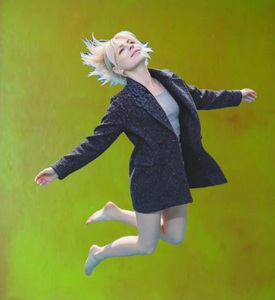
Location: Portugal
Catarina Branco is an artist born in São Miguel(Azores)
in 1974. She holds a degree in Painting from the Faculty of Fine Arts of the
University of Lisbon. She has participated in international biennials and fairs
of contemporary art. Her works are part of several public and private
collections. Among her solo exhibitions, highlights include "Fenais da
Luz" (2010), at the Fonseca Macedo – Arte Contemporânea gallery, Ponta
Delgada, and "Fez-se Luz" (2012), at the Carlos Machado Museum, Ponta
Delgada, and also, in 2013, at the contemporary art cultural centers of Recife
and Rio Grande do Sul, Brazil, where she began an artistic residency at the
Aloísio Magalhães Museum of Modern Art. In 2013, Catarina Branco was invited by
the Calouste Gulbenkian Foundation to develop a specific work to be part of the
Próximo Futuro project. The exhibition took place in the Foundation's garden.
Furthermore, during the same period, Catarina presented the site-specific
installation "Calligraphy" in the White Room of the Marquis of Pombal
Palace, home to the Carpe Diem Arte e Pesquisa cultural association in Lisbon.
In 2014, Catarina Branco participated with an original piece in the
bibliographic exhibition "April 25, 1974 - Portugal's Carnation
Revolution," California. She was invited by the Spanish curator Mónica
Careaga to participate in the group exhibition "Girls Just Want to Have
Fun" at the Astarté Gallery, Madrid. Also in 2014, she was invited by
curator Fátima Lambert to participate in a contemporary ceramics artist
residency in Alcobaça and a group exhibition at the Soares dos Reis National
Museum, Porto, and in 2024 she presented a set of new works at the Fonseca
Macedo gallery - O instante do mundo. As plantas do meu jardim, Museu Carlos Machado, Ponta Delgada em
2026.
“Catarina Branco is a multidisciplinary artist from São Miguel,
Azores, whose practice fluidly moves between painting, sculpture, and
installation. Rooted in an expressive visual language, her
work explores the tension between nature, imagination, and emotional space
through layered compositions and untamed organic forms. Drawing inspiration
from botanical imagery and abstraction, Branco creates works that seem
simultaneously instinctive and immersive, transforming painting into something
physical, atmospheric, and profoundly psychological. With a consolidated
history of international exhibitions and a practice that continues to evolve
beyond traditional boundaries, Catarina Branco is an artist worth following, as
contemporary collectors increasingly seek works that balance material
experimentation with emotional resonance. Her ability to fuse raw gestures,
sculptural presence, and lyrical abstraction positions her within a new
generation of artists who redefine the relationship between painting,
space, and perception.”
“The work of the artist is characterised by an approach that crosses different fields, going beyond traditional boundaries between disciplines. Painting emerges as the central axis of her practice, expanding into three-dimensional forms. In this exhibition, Catarina Branco (Ponta Delgada, 1974) transforms her garden into a battlefield for the construction of hybrid images.
This exhibition situates itself in an interval, a place of transition between painting and sculpture, between botanical delicacy and dense, rough matter. This is not a garden of perfection or a refuge of order. It is, rather, a human gesture that seeks to come to terms with the disorder of nature or imagination. The works in this exhibition express beauty, but not safety; they evoke a nameless place that serves creative desire, as Natália Correia said of the (poet-)artist who is occupied with inventing the world.
In this space, a process of unlearning is proposed (“To know how to see without thinking, / To know how to see when one sees,” Alberto Caeiro): the landscape is not a stage, but a state of mind — it is reality itself, imagined.
If, in many cases, the garden is an act of reconciliation, here it becomes an act of unrest, resisting the discipline of forms, where Catarina Branco’s untamed forms may, perhaps, domesticate the inevitable force of nature.”
José Macas de Carvalho
Curator for the Visual Arts — PDL26 Portuguese Capital of Culture.
In the ancient Battle of the Flowers, feelings of war and peace, sorrow and hope, silence and celebration intertwine.
Flowers are born, live briefly, and die. Even so, during their short existence, they offer colour, fragrance, texture, shape, and energy to the world. They bring joy to gardens and inspiration to the human soul.
But they also wither.
They fall.
They become fragile, soft, almost lifeless.
They decay, leaving behind the intense scent of what they once were.
Nature constantly reminds us of the beauty and fragility of existence. What we call “still life” is never truly still or dead: it transforms itself, is reborn, and continues to speak through memory, matter, and time.
Catarina Branco
In the ancient Battle of the Flowers, feelings of war and peace, sorrow and hope, silence and celebration intertwine.
Flowers are born, live briefly, and die. Even so, during their short existence, they offer colour, fragrance, texture, shape, and energy to the world. They bring joy to gardens and inspiration to the human soul.
But they also wither.
They fall.
They become fragile, soft, almost lifeless.
They decay, leaving behind the intense scent of what they once were.
Nature constantly reminds us of the beauty and fragility of existence. What we call “still life” is never truly still or dead: it transforms itself, is reborn, and continues to speak through memory, matter, and time.
In the ancient Battle of the Flowers, feelings of war and peace, sorrow and hope, silence and celebration intertwine.
Flowers are born, live briefly, and die. Even so, during their short existence, they offer colour, fragrance, texture, shape, and energy to the world. They bring joy to gardens and inspiration to the human soul.
But they also wither.
They fall.
They become fragile, soft, almost lifeless.
They decay, leaving behind the intense scent of what they once were.
Nature constantly reminds us of the beauty and fragility of existence. What we call “still life” is never truly still or dead: it transforms itself, is reborn, and continues to speak through memory, matter, and time.
In the ancient Battle of the Flowers, feelings of war and peace, sorrow and hope, silence and celebration intertwine.
Flowers are born, live briefly, and die. Even so, during their short existence, they offer colour, fragrance, texture, shape, and energy to the world. They bring joy to gardens and inspiration to the human soul.
But they also wither.
They fall.
They become fragile, soft, almost lifeless.
They decay, leaving behind the intense scent of what they once were.
Nature constantly reminds us of the beauty and fragility of existence. What we call “still life” is never truly still or dead: it transforms itself, is reborn, and continues to speak through memory, matter, and time.
In the ancient Battle of the Flowers, feelings of war and peace, sorrow and hope, silence and celebration intertwine.
Flowers are born, live briefly, and die. Even so, during their short existence, they offer colour, fragrance, texture, shape, and energy to the world. They bring joy to gardens and inspiration to the human soul.
But they also wither.
They fall.
They become fragile, soft, almost lifeless.
They decay, leaving behind the intense scent of what they once were.
Nature constantly reminds us of the beauty and fragility of existence. What we call “still life” is never truly still or dead: it transforms itself, is reborn, and continues to speak through memory, matter, and time.

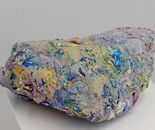 “Untitled”
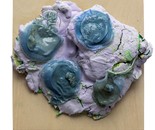 “Untitled”
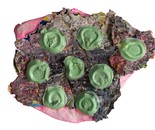 “Untitled”
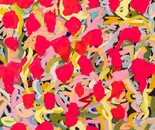 “Untitled”
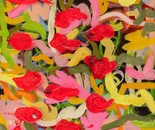 “Untitled”