

Location: Croatia
"Anima in tenebris" entirely rejects superficial decorativeness to become a space of authentic, stripped-bare conscience. At the very core of this work lies a complex symbolism of evil—that anthropological, heavy darkness which in reality manifests through the devastating forces of war, abuse, starvation, and relentless social injustice.
The ruins that dominate the distance of the canvas transcend physical destructiveness; they become a metaphysical depiction of the ruins of everything that should have been sacred. These are the tangible remnants of a shattered childhood, of broken human innocence, and of inner hopes extinguished too soon. Through heavy chiaroscuro contrasts, the work visualizes the deepest kind of suffering—the kind that arises when the world's brutality shakes and breaks a foundational faith in adults at the earliest age, leaving the child's soul unprotected.
Yet, despite the weight of the narrative, this composition does not offer mere hopelessness; it is simultaneously an appeal directed precisely at the adult world, a call to awaken collective responsibility and restore that very same lost faith in humanity. The goal of the work is to create a monumental emotional monument to vulnerability that acts like a visual scream, carrying an uncompromising message: in the face of a child's trauma and the ruins of their world, no one in modern society has the right to turn away

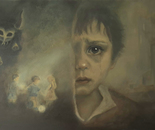 “Anima in tenebris”