

Location: South Korea (Republic of Korea)
Ami Yoon (윤아미)
Website: www.yoonami.com
E-mail: mypdt@naver.com
Phone: +82 10 6861 7618
Ami Yoon is a fine-art photographer and educator based in South Korea.
Her work investigates memory, absence, protection, and violence through photography, video and installation. Her long-term project Stories of
Loss includes major series such as Blossom (2005), A Certain Pose of Emotion (2007), FLOWOM (2008), At Night (2010–2012), Borrowed Stories
(2013–2016), and The Minimum Spring (2017–2025) — works that poetically question how loss and care coexist within human relations.
Yoon earned her MFA in Photography from Hongik University (2015) and BFA from Kyungsung University (2009). Since 2016 she has been an
Adjunct Professor at Kyungsung University, teaching Fine Art Photography and Contemporary Photo Workshop. She also leads educational and
curatorial programmes at GoEun Museum of Photography and Busan Museum of Contemporary Art. She founded DAMI Factory and serves as
Director of the Korea Environmental Photography Research Institute.
Her solo exhibitions include The Minimum Spring — Portraits We Must Remember (Busan Cultural Foundation Support Exhibition, 2021),
Borrowed Stories (Busan, 2016 / Seoul, 2014), and Invisible Stories (2018). Yoon has participated in numerous group shows such as Paris Photo
2021 (Christophe Guye Galerie, Paris), Young & Young Artist Project (Young Eun Museum of Contemporary Art, 2021), Busan International Photo
Festival 2025, and Daegu Photo Biennale 2016.
Her works are held in the collections of Young Eun Museum of Contemporary Art (Korea), Christophe Guye Galerie (Switzerland), GoEun Museum
of Photography (Korea), and Dan Arendt Collection (Luxembourg). She has been awarded by the Seoul Foundation for Arts and Culture (2015)
and Daegu Photo Biennale (2014).
Yoon regularly lectures on fine-art photography and visual theory across Korea and serves as jury member for public art committees.
Ami Yoon’s practice can be understood as a philosophical inquiry into memory and the unconscious — an experimental endeavour to redefine
the private language of art as a social language. Through this process, she poses perceptual questions with a delicate gaze, revealing an ethical
sensitivity attuned to the times. Her work thus becomes a way of living — a continuous act of perceiving and feeling the world’s moral
temperature.
I have long examined how accumulated and invisible psychological states take
form within the inner self, and how the human mind finds its way outward
through the body. Since 2005, the ongoing project Stories of Loss has dealt
with the inescapable forms of loss we encounter throughout our lives. In the
present era, we repeatedly experience similar anxieties and forms of social
estrangement, becoming emotionally interconnected organisms. These heightened
personal emotions and questions have sharpened my awareness of the crises
unfolding around us and compelled me to ask: Why do we continue to sustain
precarious relationships with others?
In my practice, loss appears in multiple forms. Yet I do not focus solely on loss
itself. What concerns me more is the posture with which we confront it—the
human will to endure and overcome. Recording this will becomes a way of
witnessing how we survive hazardous experiences; it is also akin to documenting
the fundamental conditions that make our existence possible. Photography
naturally functions here as a device of evidence, a medium that holds on to
what has been overlooked. Through installation structures and staged
compositions, the lost or suspended moments become more delicately grasped.
This approach maintains anonymity, refraining from identifying specific
individuals, and opens the work to a broader, collective narrative. In this way,
photography becomes a circulatory language—one that assists in bearing
witness.
In [The Minimum Spring], the word “spring” holds a dual meaning: the act of
seeing and the season in which life begins again. The “minimum spring”
signifies the smallest unit of hope, the last remaining expectation, the faintest
beginning, the most tentative first step, and the minimal threshold at which one
confronts reality.
Family is the first site in which identity is formed and the smallest unit of
society; it is a foundational structure that determines the textures of one’s inner
world, memory, and emotions. The psychological exchanges and incidents that
arise within familial relationships leave profound imprints on the mind. Through
this work, I confront the failure of protection. By addressing real cases of child
abuse, I reveal violence disguised as care and the wounds concealed under the
sanctioned name of “family.” The familial “embrace” becomes a fragment of
memory reconstructed atop remnants of warmth, where the boundaries between
love and violence endlessly cross and intertwine. Within this contradictory
collision of emotions, I question how the ethics of protection can destroy the
inner self and yet, paradoxically, make us long for that protection once more.
[The Minimum Spring: A Dirge for the Child] focuses on the symbolic
reenactment of actual child abuse cases. By capturing the psychological and
physical violence that permeates daily family life yet often goes unnoticed, the
work summons invisible structures of harm into perceptible form. Memory is the
history of an individual, and history is the memory of a collective. What occurs
within a single household eventually remains only as a private recollection. This
work seeks to relocate such incidents into the realm of collective memory,
reframing them as unresolved historical responsibilities that must be brought
into public light.
Ami Yoon — Artist’s Note
저는 오랫동안 축적된 심리 상태와 보이지 않는 심리 상태가 내면에서 어떻게 형성되는지, 그리고 인간의 마음이 몸을 통해 어떻게 바깥으로 나가는지를 조사해 왔습니다.
I have long examined how accumulated and invisible psychological states take
form within the inner self, and how the human mind finds its way outward
through the body. Since 2005, the ongoing project Stories of Loss has dealt
with the inescapable forms of loss we encounter throughout our lives. In the
present era, we repeatedly experience similar anxieties and forms of social
estrangement, becoming emotionally interconnected organisms. These heightened
personal emotions and questions have sharpened my awareness of the crises
unfolding around us and compelled me to ask: Why do we continue to sustain
precarious relationships with others?
In my practice, loss appears in multiple forms. Yet I do not focus solely on loss
itself. What concerns me more is the posture with which we confront it—the
human will to endure and overcome. Recording this will becomes a way of
witnessing how we survive hazardous experiences; it is also akin to documenting
the fundamental conditions that make our existence possible. Photography
naturally functions here as a device of evidence, a medium that holds on to
what has been overlooked. Through installation structures and staged
compositions, the lost or suspended moments become more delicately grasped.
This approach maintains anonymity, refraining from identifying specific
individuals, and opens the work to a broader, collective narrative. In this way,
photography becomes a circulatory language—one that assists in bearing
witness.
In [The Minimum Spring], the word “spring” holds a dual meaning: the act of
seeing and the season in which life begins again. The “minimum spring”
signifies the smallest unit of hope, the last remaining expectation, the faintest
beginning, the most tentative first step, and the minimal threshold at which one
confronts reality.
Family is the first site in which identity is formed and the smallest unit of
society; it is a foundational structure that determines the textures of one’s inner
world, memory, and emotions. The psychological exchanges and incidents that
arise within familial relationships leave profound imprints on the mind. Through
this work, I confront the failure of protection. By addressing real cases of child
abuse, I reveal violence disguised as care and the wounds concealed under the
sanctioned name of “family.” The familial “embrace” becomes a fragment of
memory reconstructed atop remnants of warmth, where the boundaries between
love and violence endlessly cross and intertwine. Within this contradictory
collision of emotions, I question how the ethics of protection can destroy the
inner self and yet, paradoxically, make us long for that protection once more.
[The Minimum Spring: A Dirge for the Child] focuses on the symbolic
reenactment of actual child abuse cases. By capturing the psychological and
physical violence that permeates daily family life yet often goes unnoticed, the
work summons invisible structures of harm into perceptible form. Memory is the
history of an individual, and history is the memory of a collective. What occurs
within a single household eventually remains only as a private recollection. This
work seeks to relocate such incidents into the realm of collective memory,
reframing them as unresolved historical responsibilities that must be brought
into public light.
Ami Yoon — Artist’s Note
The Minimum Spring: A Dirge for the Child explores the unseen psychological
and physical violence that unfolds within the family—violence often concealed
beneath the language of care. Building upon my long-term project Stories of
Loss (2005–), the work examines how loss shapes our inner world not as a
single event but as a structural condition of life. Through photography, staged
scenes, and installation, I investigate how fragile states of fear, silence, and
fragmented memory manifest within the body and space.
The work reflects on child abuse cases in which protection collapses into harm.
By transforming these incidents into symbolic visual forms, I seek to expose the
hidden architectures of violence that permeate domestic life. Memory,
understood as both personal history and collective responsibility, becomes a
central axis: what begins as a private wound must eventually be brought into
the realm of shared accountability. The work ultimately asks how we confront
the violence that takes place where love is presumed to exist, and how we
might reimagine protection beyond the boundaries of the family
The Minimum Spring: A Dirge for the Child explores the unseen psychological
and physical violence that unfolds within the family—violence often concealed
beneath the language of care. Building upon my long-term project Stories of
Loss (2005–), the work examines how loss shapes our inner world not as a
single event but as a structural condition of life. Through photography, staged
scenes, and installation, I investigate how fragile states of fear, silence, and
fragmented memory manifest within the body and space.
The work reflects on child abuse cases in which protection collapses into harm.
By transforming these incidents into symbolic visual forms, I seek to expose the
hidden architectures of violence that permeate domestic life. Memory,
understood as both personal history and collective responsibility, becomes a
central axis: what begins as a private wound must eventually be brought into
the realm of shared accountability. The work ultimately asks how we confront
the violence that takes place where love is presumed to exist, and how we
might reimagine protection beyond the boundaries of the family
The Minimum Spring: A Dirge for the Child explores the unseen psychological
and physical violence that unfolds within the family—violence often concealed
beneath the language of care. Building upon my long-term project Stories of
Loss (2005–), the work examines how loss shapes our inner world not as a
single event but as a structural condition of life. Through photography, staged
scenes, and installation, I investigate how fragile states of fear, silence, and
fragmented memory manifest within the body and space.
The work reflects on child abuse cases in which protection collapses into harm.
By transforming these incidents into symbolic visual forms, I seek to expose the
hidden architectures of violence that permeate domestic life. Memory,
understood as both personal history and collective responsibility, becomes a
central axis: what begins as a private wound must eventually be brought into
the realm of shared accountability. The work ultimately asks how we confront
the violence that takes place where love is presumed to exist, and how we
might reimagine protection beyond the boundaries of the family

 “The Minimum Spring”
 “The Minimum Spring”
 “The Minimum Spring”
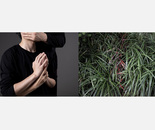 “The Minimum Spring”
 “The Minimum Spring”