
I have long examined how accumulated and invisible psychological states take
form within the inner self, and how the human mind finds its way outward
through the body. Since 2005, the ongoing project Stories of Loss has dealt
with the inescapable forms of loss we encounter throughout our lives. In the
present era, we repeatedly experience similar anxieties and forms of social
estrangement, becoming emotionally interconnected organisms. These heightened
personal emotions and questions have sharpened my awareness of the crises
unfolding around us and compelled me to ask: Why do we continue to sustain
precarious relationships with others?
In my practice, loss appears in multiple forms. Yet I do not focus solely on loss
itself. What concerns me more is the posture with which we confront it—the
human will to endure and overcome. Recording this will becomes a way of
witnessing how we survive hazardous experiences; it is also akin to documenting
the fundamental conditions that make our existence possible. Photography
naturally functions here as a device of evidence, a medium that holds on to
what has been overlooked. Through installation structures and staged
compositions, the lost or suspended moments become more delicately grasped.
This approach maintains anonymity, refraining from identifying specific
individuals, and opens the work to a broader, collective narrative. In this way,
photography becomes a circulatory language—one that assists in bearing
witness.
In [The Minimum Spring], the word “spring” holds a dual meaning: the act of
seeing and the season in which life begins again. The “minimum spring”
signifies the smallest unit of hope, the last remaining expectation, the faintest
beginning, the most tentative first step, and the minimal threshold at which one
confronts reality.
Family is the first site in which identity is formed and the smallest unit of
society; it is a foundational structure that determines the textures of one’s inner
world, memory, and emotions. The psychological exchanges and incidents that
arise within familial relationships leave profound imprints on the mind. Through
this work, I confront the failure of protection. By addressing real cases of child
abuse, I reveal violence disguised as care and the wounds concealed under the
sanctioned name of “family.” The familial “embrace” becomes a fragment of
memory reconstructed atop remnants of warmth, where the boundaries between
love and violence endlessly cross and intertwine. Within this contradictory
collision of emotions, I question how the ethics of protection can destroy the
inner self and yet, paradoxically, make us long for that protection once more.
[The Minimum Spring: A Dirge for the Child] focuses on the symbolic
reenactment of actual child abuse cases. By capturing the psychological and
physical violence that permeates daily family life yet often goes unnoticed, the
work summons invisible structures of harm into perceptible form. Memory is the
history of an individual, and history is the memory of a collective. What occurs
within a single household eventually remains only as a private recollection. This
work seeks to relocate such incidents into the realm of collective memory,
reframing them as unresolved historical responsibilities that must be brought
into public light.
Ami Yoon — Artist’s Note
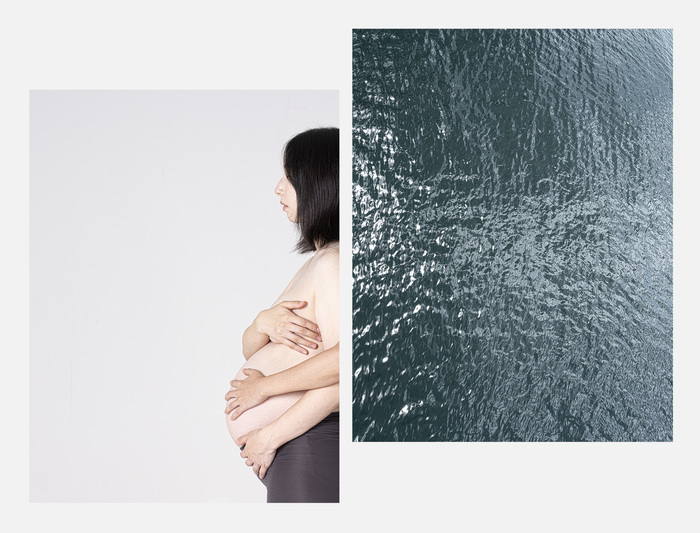 “The Minimum Spring”
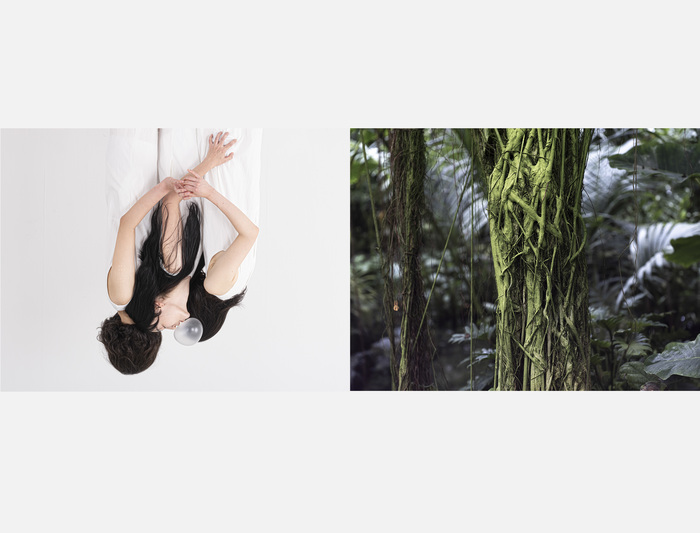 “The Minimum Spring”
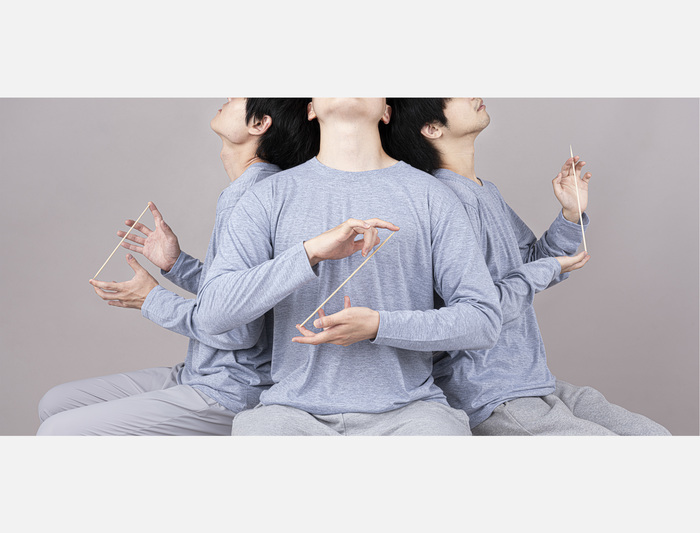 “The Minimum Spring”
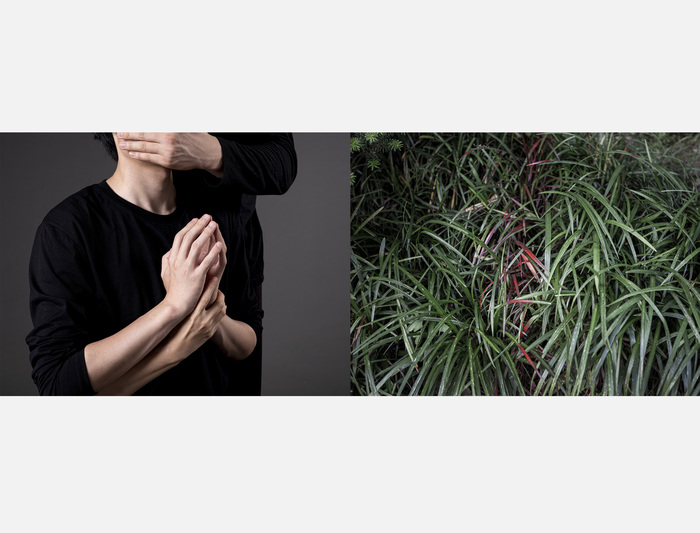 “The Minimum Spring”
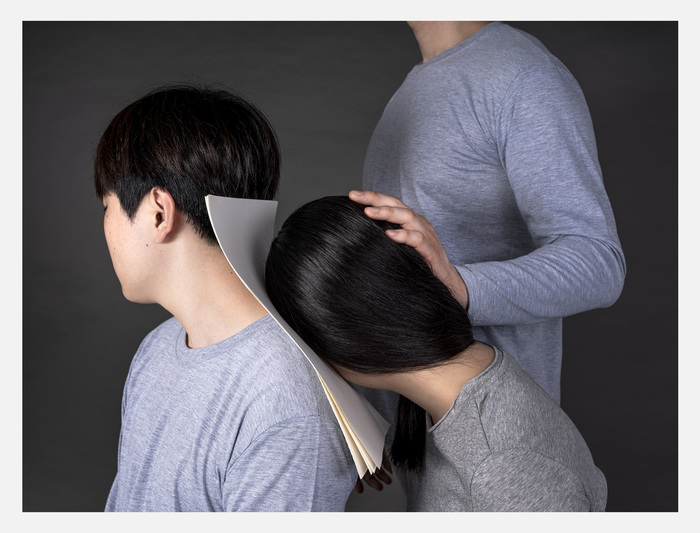 “The Minimum Spring”